All articles
On the Job: Gina Trotta, VP of Residential Operations, Related Companies
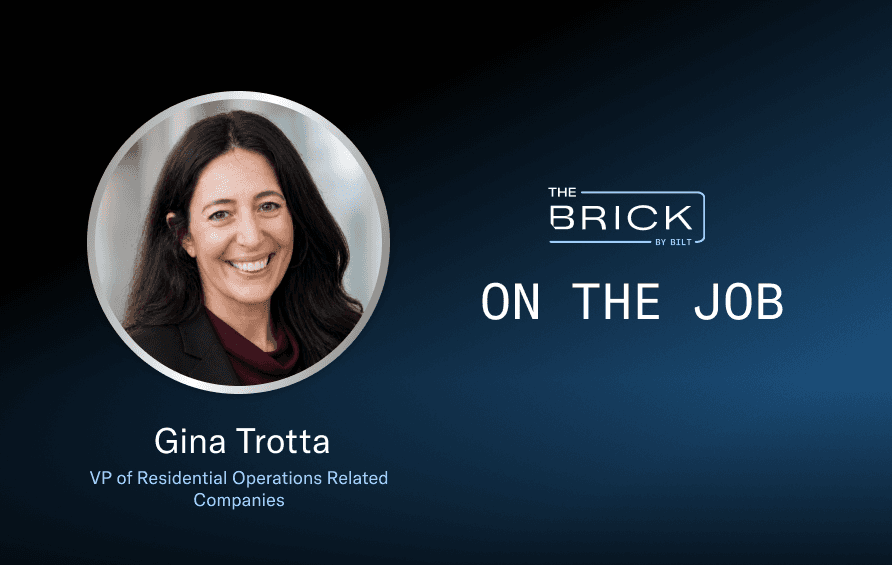
As VP of Residential Operations at Related Companies, Gina Trotta has built her career with a hands-on, intentional approach. Rising from an entry-level role in property management to leading the tech ecosystem behind the resident and on-site experience, she’s grown by raising her hand, making smart pivots, and prioritizing long-term impact over short-term wins—turning setbacks into fuel and bridging the gap between operations and innovation along the way.
That approach recently earned her a promotion to VP – news that, at home, came with a bit more fanfare. When her son heard, he looked up and asked, “You’re VP of the United States!?”
Check out Gina’s interview below, and subscribe to The Brick for more profiles on housing leaders — including their paths and advice for the next generation.
Getting in on the Ground Floor
How would you describe the path you took to get where you are today? What lateral moves, skill-building moments, or strategic pivots shaped your journey, and why?
I started my career at an entry-level property management position with pretty limited duties—mostly customer service and some light accounting. But from day one, I made a choice to treat every single task as a chance to learn. I was constantly looking for ways to get included in bigger conversations and always tried to get a seat at the table with the decision-makers.
A huge moment for me was when I volunteered for a lease-up as an assistant manager. It was a chance to step out of my comfort zone and get a feel for a faster, more complex side of the business. I also made sure to ask for ownership of certain tasks, which helped me deepen my operational know-how and build a reputation as a go-getter.
When the GM role was first created at Related, I was senior enough to go for it. But I was honest with myself—I knew I still had some things to learn before I was ready for that level of leadership. So, instead of jumping ahead too soon, I made a strategic move into a training and support role for the incoming GM. It was a great way to share my knowledge, help new leaders get up to speed, and polish my own management skills.
By being real about my strengths and where I needed to grow, and by intentionally seeking out opportunities to build my skills, I set myself up for success in the long run. Every step was deliberate and helped shape the leader I am today.
The Building Process
What was one of the most challenging professional setbacks you faced…one that may have felt bad in the moment but ultimately taught you a lasting lesson? What did you learn, and how did it change you?
Early in my career, it was tough getting passed over for promotions, especially when I saw people with less hands-on experience stepping into leadership roles. In those moments, it was definitely frustrating and discouraging. It would have been easy to just walk away and start fresh somewhere else.
Instead, I chose to stay. I took a step back and reminded myself that I had valuable, "boots on the ground" experience that couldn’t be learned overnight. My worth wasn't tied to someone else's promotion. That shift in mindset was everything—I stopped comparing my journey to others and got intentional about my own growth.
That experience taught me how important self-confidence and resilience really are. I learned to trust my gut, advocate for myself, and be deliberate about showing my impact. Ultimately, being overlooked forced me to become more self-aware and confident in my own skills, focusing on my long-term growth instead of just short-term validation.
What was one of your biggest professional wins or breakout opportunities? What did it teach you, and how did it shape your trajectory?
A huge turning point for me was getting picked to join the working group for the new resident app Related was developing. I was able to bring a unique perspective from my on-site operations background and a real understanding of what residents actually needed.
I jumped in and helped shape the app's features to make sure they worked in the real world, not just on paper. Because of that, I became a go-to person for the project. As the app evolved through different teams and updates, I was the constant, helping steer its direction.
What started as a side project grew into a core part of my job and, eventually, my main focus. That experience taught me to use my expertise in new ways and showed me that stepping into something unfamiliar, like tech development, can open up a whole new career path. It shifted my trajectory from pure operations to a more strategic role where operations and technology meet.
What You’re Building Today
What does your role look like today? Walk us through what you oversee, the impact you aim to have, and how your day-to-day responsibilities reflect the skills you’ve built over time.
Today, I manage the tech ecosystem for our residents and on-site teams. My main goal is to make sure every interaction a resident has with our technology feels true to the Related brand and the high standards we have.
At the same time, I always look at new technology through an operational lens. I’m focused on not overcomplicating workflows that were already working well. My goal is to ensure that new tools genuinely make our teams' jobs easier and more intuitive, not the other way around.
A big part of my role is being the bridge between the tech developers and the on-site teams. Since I came from property management myself, I can ground our decisions in practical, real-world experience. That gives me credibility with the teams—they know I understand their daily challenges and won’t just throw another complicated tool at them.
Leadership Structures
How would you describe your leadership style today, and how has it evolved throughout your career?
I’d say my style is direct, authentic, and grounded. The person you get in a meeting is the same person you get one-on-one. That consistency is key for building trust.
I’m candid, but always with the goal of being constructive. I have high standards for myself and my team, but I also make it clear that I’m here to help and clear roadblocks.
My style has definitely evolved. Earlier in my career, I sometimes felt like I had to say what I thought people wanted to hear. As I’ve gotten more experience, I’ve learned to trust my perspective. Now, I focus on saying what needs to be said—respectfully, of course—even when it’s not the popular opinion. That shift has made me a more confident and reliable leader.
Blueprints for Future Operators
What advice would you give to rising operators in real estate who want to advance into senior roles?
Simple: always raise your hand. Don’t just stick to your job description. Look for chances to get involved in projects outside of your day-to-day. That’s where the real growth happens.
And when you do step in, be intentional. Don’t just be a name on a list—contribute in a meaningful way, ask good questions, and find ways to add value. That’s how you stand out.
Also, ask to be in the room. You can learn so much just by listening to how decisions are made and how leaders think through problems.
Finally, find the balance between confidence and humility. Be confident enough to speak up and advocate for yourself, but stay humble enough to listen, take feedback, and remember there’s always more to learn. That combination will take you far.